
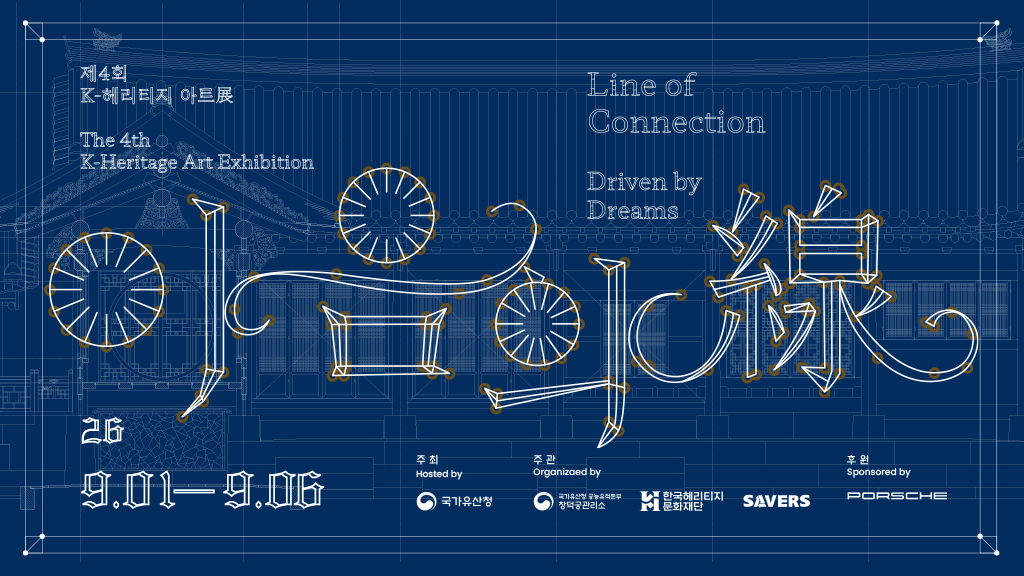
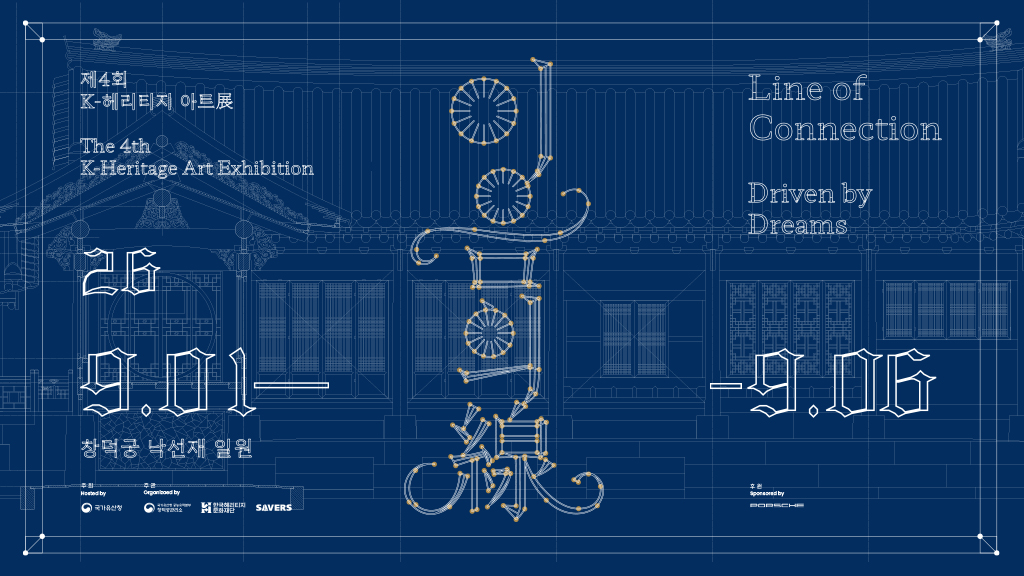
K-헤리티지 아트展 : 이음의 선(線) K-Heritage Art Exhibition : Line of Connection
궁궐은 본래 박물관이 아니었다. 사람이 살았고 정치와 의례가 이루어졌으며, 왕실의 필요에 따라 당대의 뛰어난 장인과 기술이 모여 새로운 공간과 기물을 만들어내던 곳이었다. 창덕궁의 낙선재(樂善齋)와 석복헌(錫福軒), 수강재(壽康齋) 역시 한때 사람의 몸과 움직임으로 채워진 생활의 공간이었다. 낮은 처마와 마루, 방과 방을 잇는 문, 창 너머의 뜰을 걷다 보면 이곳의 아름다움이 웅장함보다 삶 가까이에 있음을 알게 된다.
A palace was never meant to be a museum. People lived within its walls; politics and ritual took place there; and the royal court drew together the finest artisans and skills of the day to create new spaces and objects. Nakseonjae (樂善齋), Seokbokheon (錫福軒), and Sugangjae (壽康齋) at Changdeokgung were themselves once such spaces of daily life, filled with human presence and movement. To walk beneath their low eaves, along the maru (open wooden hall), through the doors that link room to room, and into the garden glimpsed beyond a window, is to discover that the beauty of this place lies not in grandeur but in its closeness to life.
오래됐다고 모두 전통이 되는 것은 아니다. 전통은 누군가 다시 배우고 만들고 쓰는 동안 이어진다. 원형을 지키는 일과 변화하는 일 역시 반대편에 놓이지 않는다. 기술은 다른 손을 만나고 재료는 다른 시대를 지나며 조금씩 달라진다.
Age alone does not make something a tradition. Tradition endures only as long as someone continues to learn, make, and use it anew. Preserving the original form and allowing it to change are not opposites. A technique meets other hands; a material passes through other eras; and each time, something shifts, however slightly.
그 변화는 장인의 손에서 가장 분명하게 드러난다. 나무에는 결이 있고 옻에는 마르는 시간이 있다. 돌과 금속, 종이와 섬유도 다루는 법이 모두 다르다. 만드는 사람은 그것을 오래 익히고 기다리며 형태를 찾아간다. 자수와 금박, 소목과 칠, 입사와 누비, 채상과 궁시, 장도에 이르기까지 이번 전시에 모인 작업은 오래된 기술을 고스란히 되풀이한 것이 아니다. 손에서 손으로 건너오는 동안 시대의 변화까지 품어온 지식이다.
This change is nowhere more evident than in the artisan’s hands. Wood has its grain; lacquer has its own time to dry. Stone and metal, paper and fiber each demand a different manner of handling. The maker learns these over long years, waits, and searches for form within them. From embroidery and gold leaf imprinting to wood furniture making and lacquerware, silver-and-gold inlaying and quilting, bamboo case weaving and bow-and-arrow making, to ornamental knife making — the works gathered for this exhibition are not simple repetitions of technique handed down whole. They are knowledge that has absorbed the changes of each era as it passed from hand to hand.
2023년에 시작된 《K-헤리티지 아트전》도 네 해를 지나며 그 폭을 넓혀왔다. 무형유산과 전통 공예에서 출발해 현대 공예를 거쳐 회화와 사진, 조각 등 동시대 미술까지 영역을 확장했다. 올해는 무형유산 전승자를 비롯한 전통 장인과 현대 작가 48인이 참여한다.
The K-Heritage Art Exhibition, launched in 2023, has broadened its scope over four years — beginning with intangible heritage and traditional craft, moving through contemporary craft, and now extending into painting, photography, sculpture, and other forms of contemporary art. This year’s edition brings together forty-eight participants: traditional artisans, including certified transmitters and successors of intangible heritage, alongside contemporary artists.
이를 굳이 ‘전통의 현대화’라는 한 방향의 이야기로 설명할 필요는 없다. 공예가 미술이 되어야 동시대성을 얻는 것도 아니고, 현대 미술이 전통을 빌려야 궁궐에 들어올 자격을 얻는 것도 아니다. 서로 다른 시간과 방식으로 만들어진 것들이 한 장소에 놓이면 차이는 오히려 또렷해지고, 예상하지 못했던 닮음도 보인다.
There is no need to frame this simply as “the modernization of tradition.” Craft does not need to become art to gain contemporary relevance, nor does contemporary art need to borrow from tradition to earn its place within the palace walls. When things made in different times and by different means are placed side by side, their differences become sharper — and unexpected resemblances emerge as well.
궁궐에서 이런 만남을 시도할 때는 우리 사회에 남아 있는 조심스러움도 함께 따른다. 대한제국 말기와 일제강점기를 지나며 궁궐은 여러 차례 본래의 기능과 모습을 잃었다. 창경궁에는 동물원과 식물원이 들어섰고 1911년에는 이름마저 ‘창경원(昌慶苑)’으로 바뀌었다. 경복궁에서는 1915년 조선물산공진회(朝鮮物産共進會)를 치르는 과정에서 수많은 전각이 철거됐고, 이후 조선총독부(朝鮮總督府) 청사가 궁의 중심을 가로막았다. 덕수궁 역시 일부 전각이 헐리고 공원으로 재편됐다. 궁궐을 본래와 다른 용도로 사용하는 일에 우리가 유난히 신중한 데에는 이런 기억이 남아 있다.
Attempting such encounters within a palace also carries a certain wariness that lingers in our society. Through the final years of the Korean Empire and the Japanese colonial period, the palaces repeatedly lost their original function and form. A zoo and botanical garden were built at Changgyeonggung, and in 1911 even its name was changed to “Changgyeongwon (昌慶苑).” At Gyeongbokgung, numerous halls were demolished for the 1915 Joseon Industrial Exhibition (朝鮮物産共進會), and the building of the Government-General of Korea (朝鮮總督府) was later erected to block the very heart of the palace. At Deoksugung too, some halls were torn down and the grounds reorganized as a park. This history remains embedded in the particular caution with which we approach any new use of these palaces.
그러나 장소의 역사와 상징을 지운 채 새로운 기능을 덧입히는 것과 그 시간을 존중하며 오늘 다시 살아 있게 하는 것은 다른 일이다. 이제 질문은 궁궐을 열 것인가가 아니다. 어떻게 열 것인가다.
But imposing a new function at the cost of a site’s history and symbolism is very different from putting the site to new use while respecting its past and keeping it alive in the present. The question, then, is no longer whether to open the palace, but how.
비슷한 시도는 세계의 오래된 궁전과 성에서도 이루어져 왔다. 베르사유 궁전(Château de Versailles)은 동시대 작가들의 작품을 궁전과 정원에 들여왔고, 샹보르 성(Château de Chambord)에서는 작가가 머물며 장소에서 출발한 작업을 만든다. 영국 국왕의 공식 런던 거처이자 지금도 왕실 업무에 사용되는 버킹엄 궁전(Buckingham Palace) 역시 공식 접견과 의전에 사용되는 스테이트 룸(State Rooms)을 일정 기간 대중에게 공개한다. 중요한 것은 얼마나 많이 개방하느냐가 아니다. 새로운 쓰임이 장소의 기억을 지우지 않으면서 그 위에 또 하나의 시간을 보탤 수 있느냐는 것이다.
Similar efforts have unfolded at historic palaces and châteaux around the world. The Château de Versailles has brought contemporary artists’ works into its palace and gardens; at the Château de Chambord, artists reside on site to create works that begin from the place itself. Buckingham Palace — the official London residence of the British monarch, still used for royal business today — opens its State Rooms, used for official receptions and ceremony, to the public for a set period each year. What matters is not how much is opened, but whether a new use can add another layer of time onto a place without erasing its memory.
오늘의 작품을 낙선재에 들이는 일도 같은 질문에서 출발한다. 현대 미술이 오래된 궁궐을 ‘현대적으로’ 만들어주는 것은 아니다. 오히려 낯선 작품을 마주하는 순간 이미 잘 안다고 생각했던 기둥과 창호, 마루와 빛이 새롭게 보인다. 반대도 마찬가지다. 미술관의 흰 벽에서 보던 회화와 조각은 오래된 목조건축의 비례와 빛, 그림자를 만나 다른 표정을 얻는다. 한쪽이 다른 쪽을 설명하는 것이 아니라 나란히 놓임으로써 둘 다 새롭게 보인다.
Bringing today’s works into Nakseonjae begins from this same question. Contemporary art does not “modernize” an old palace. Rather, encountering an unfamiliar work makes us see anew the pillars, changho (lattice doors and windows), maru, and light we thought we already knew well. The reverse holds equally true: paintings and sculptures usually seen against a museum’s white walls take on a different expression when they meet the proportions, light, and shadow of old timber architecture. Neither side explains the other; placed side by side, both are seen anew.
올해 전시는 이 관계를 낙선재와 석복헌, 수강재에서 조금씩 다른 방식으로 드러낸다. 낙선재에서는 오래 이어온 손의 기술과 재료를 만나고, 석복헌에서는 전통 공예와 현대 공예, 사진과 회화가 가까이 놓이며 장르 사이의 경계가 느슨해진다. 수강재에는 국내외 동시대 작가들의 작업이 더해지며 만남의 폭도 자연스레 넓어진다.
This year’s exhibition reveals that relationship in slightly different ways across Nakseonjae, Seokbokheon, and Sugangjae. At Nakseonjae, visitors encounter long-inherited techniques of the hand and their materials. At Seokbokheon, traditional and contemporary craft, photography, and painting are placed close together, loosening the boundaries between genres. At Sugangjae, the addition of work by contemporary artists from Korea and abroad naturally widens the scope of encounter.
그렇다고 이를 과거에서 현재로 나아가는 연대표처럼 읽을 필요는 없다. 전시장 곳곳에서 작품은 그런 구분을 넘나든다. 장인은 오늘을 살며 작업하고, 동시대 작가의 작품에도 오래된 재료와 이미지, 기억이 흐른다. 전승은 끊임없이 달라져 왔고 새로워 보이는 것 역시 오래 쌓인 시간 위에 놓여 있다.
Even so, none of this should be read as a timeline moving from past to present. Throughout the exhibition, the works cross such distinctions freely. Artisans live and work in the present; and old materials, images, and memories flow through the works of contemporary artists as well. Transmission has always been changing, and even what appears newest rests upon long-accumulated time.
‘이음의 선(線)’은 그래서 과거와 현재라는 두 점을 곧게 연결한 선이 아니다. 한 사람의 손에서 다른 손으로, 하나의 재료에서 다른 형식으로, 한 시대의 삶에서 다음 시대의 감각으로 움직이는 선이다. 때로 방향을 틀고 다른 선과 만나며 이전에는 없던 무늬를 만든다.
The Line of Connection is, therefore, not a straight line drawn between two points called past and present. It is a line that moves — from one hand to another, from one material into another form, from the life of one era into the sensibility of the next. It bends at times, meets other lines, and forms patterns that did not exist before.
전통도 궁궐도 그렇게 시간을 건너왔다. 보존이 시간을 지키는 일이라면, 활용은 그 시간이 오늘을 지나 다음으로 이어지게 하는 일이다. 오래된 것이 다른 시대의 눈과 만나는 순간 과거는 박제된 채 머무르지 않고 다시 현재의 시간이 된다. 이어진다는 것은 같은 자리에 남아 있다는 뜻이 아니다. 선은 다음을 향해 움직일 때 비로소 이어진다.
Tradition, and the palace itself, have crossed time in just this way. If preservation is the act of holding time in place, use is what allows that time to pass through today and continue onward. The moment something old meets the eyes of another era, the past is no longer left embalmed — it becomes present time once again. To be connected does not mean remaining in the same place. A line is only truly connected when it moves toward what comes next.