
김자인, 회화
Kim Za-in [Painting]
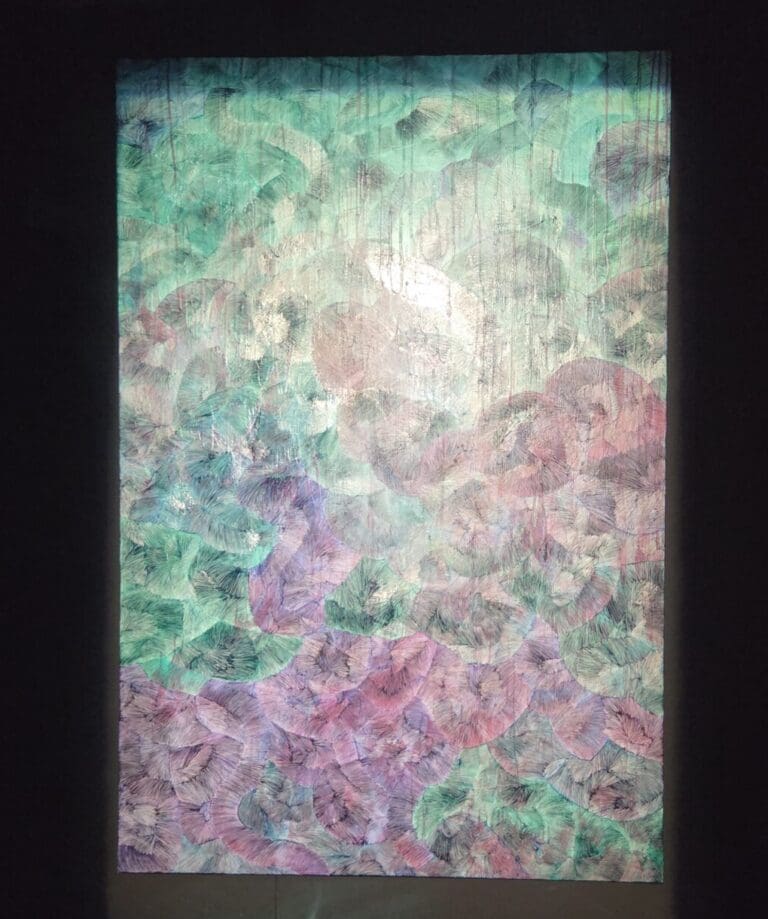
Field Vibration Painting_ Urban Pulse 18 acrylic on canvas 194×130.4cm
Field Vibration Painting_ Urban Pulse 19 acrylic on canvas 194×130.4cm
현대작가 김자인은 ‘Iridescence World’라는 세상을 구축하는 작업을 진행하는데, 도예가인 아버지 김시영 작가의 도자 도구와 필드 바이브레이션 기법을 결합하여 영원성을 시각적으로 표현하고 있다. 이 ‘구조색’의 세상을 통해 다양한 형상과 역동적인 움직임을 나타내며 새로운 관계 속에서 만들어진 유기적인 추상 언어로 끊임없는 에너지와 의미를 생성하고자 한다. 2019년부터 지구라트, 괴베클리테페, 스톤헨지, 노트르담 성당, 베를린 국회의사당과 같은 거대 건축 공간에서 얻은 영감으로 거대 건축에 담겨있는 위치 에너지를 운동에너지로 가시화하는 ‘장진동(Field Vibrarion)’ 기법을 개발하여 작품에 담고 있다.
Contemporary artist Kim Za-in is creating a world she calls ‘Iridescence World,’ where she combines her father Kim Si-young’s ceramic tools with the field vibration technique to visually express eternity. Through this ‘structural color’ world, she depicts various forms and dynamic movements, generating endless energy and meaning through an organic abstract language within new relationships. Since 2019, she has developed the ‘Field Vibration’ technique, which transforms the potential energy in monumental architecture into kinetic energy. This technique draws inspiration from grand architectural spaces like ziggurats, Göbekli Tepe, Stonehenge, Notre Dame Cathedral, and the Berlin Reichstag, incorporating these influences into her work.Kim Ja-in.
김시영, 흑유
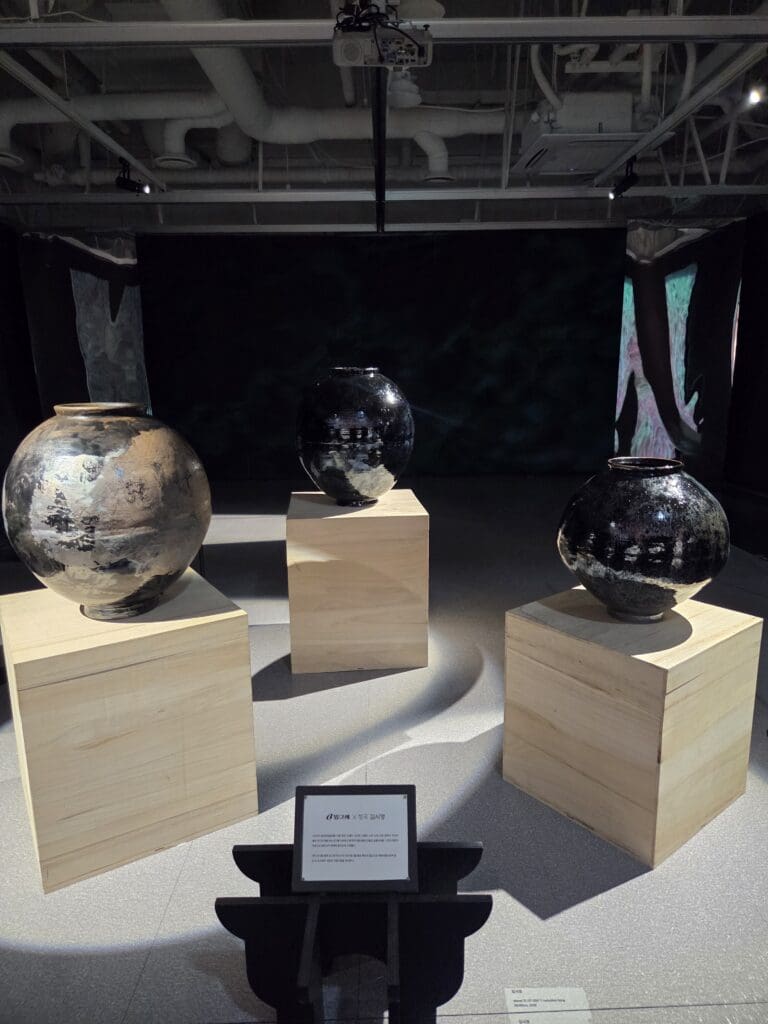
Kim Sy-young [Black Ceramics]
planet TL-26 1350˚C reduction firing 58×51cm
planet TL-27 1350˚C reduction firing 55×50cm
planet TM-30 1350˚C reduction firing 44×42cm
김시영 작가는 조선시대에 명맥이 끊긴 고려 흑자(黑磁)를 빚는다. 흑유자, 또는 흑자라 불리는 도자는 이름처럼 먹색의 빛을 띤다. 문헌상으로 고려시대에 청자와 함께 만들어졌다는 기록이 있지만, 조선시대에 그 명맥이 끊겼다. 지금도 우리는 고려청자, 조선백자만 기억할 뿐 고려 흑자는 생경하다. 동양 예술의 근간은 도자이고, 도자는 화염의 예술이다. ‘화염의 연금술사’라고 불리는 김시영은 화염의 예술의 극치인 흑자 도자만을 35년 이상 고집해 작업하고 있다. 그 작품성을 인정받아 대한민국 문화훈장 화관을 서훈하였고, 그의 52cm 대형 흑자 달항아리는 영국 빅토리아 앤 알버트 뮤지엄(V&A)에도 소장 되어 있다.
Kim Sy-young is an artist dedicated to crafting Goryeo black porcelain, a tradition that was lost during the Joseon Dynasty. Known as heukyuja or heukja, these ceramics are distinguished by their ink-black glaze. Historical records indicate that black porcelain was produced alongside celadon during the Goryeo Dynasty, but the craft did not survive into the Joseon period. While Goryeo celadon and Joseon white porcelain are well-known today, Goryeo black porcelain remains relatively obscure. Ceramics, an art form created through fire, are the foundation of East Asian art. Often called the “Alchemist of Flame,” Kim Si-young has spent over 35 years perfecting the art of black porcelain. His excellence in craftsmanship has earned him the Order of Cultural Merit in South Korea, and his large 52 cm black porcelain moon jar is part of the collection at the Victoria and Albert Museum (V&A) in the United Kingdom.
신한철, 조각
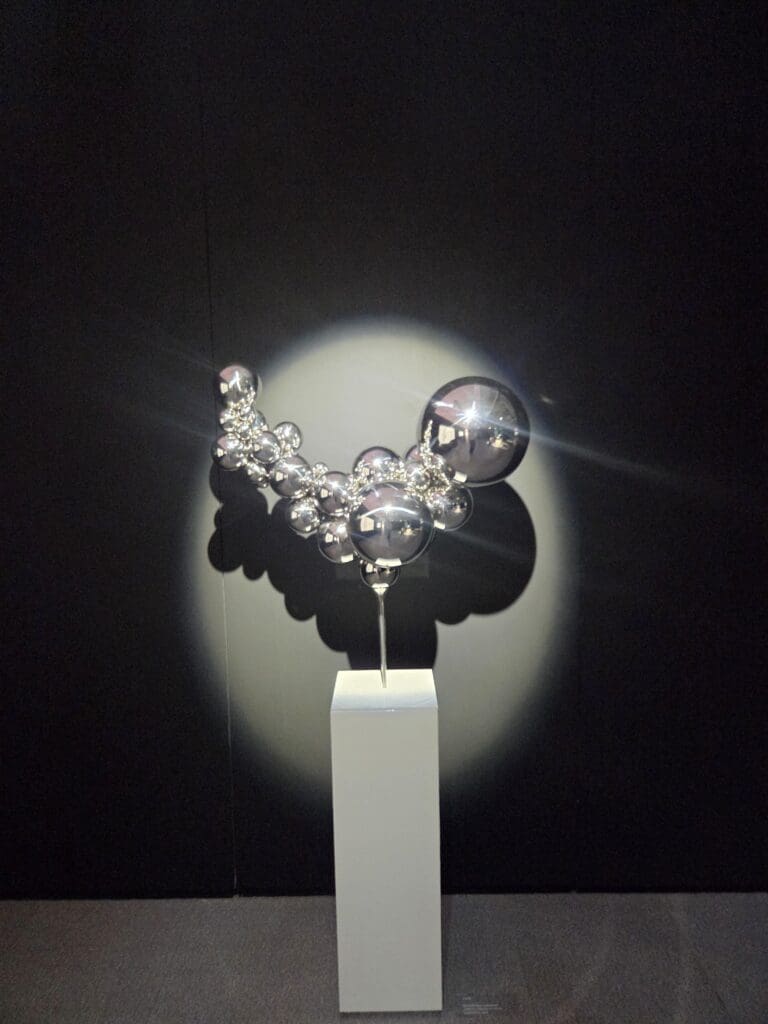
Shin Han-chul [Sculpture]
꿈무리(Dreams Gathered) 스테인리스 스틸(stainless steel) 71x39x80cm
꿈무리(Dreams Gathered) 스테인리스 스틸(stainless steel) 71x39x80cm
평범한 원형을 다양한 크기와 재질로 변형시킨 후 이를 조합해 생명의 에너지를 전달하는 작품을 만든다. 그의 작품 속 크고 작은 구들은 생명과 존재, 그리고 우주의 근본적 단위를 상징한다. 스테인레스 스틸을 주 재료로 쓰는 그는 작품을 통해 현실과 가상의 경계를 허물고, 관람객에게 존재의 반영과 생명의 에너지를 느끼게 한다.
The artist creates works by transforming ordinary circular forms into various sizes and materials, then combining them to convey the energy of life. The large and small spheres in his works symbolize life, existence, and the fundamental units of the universe. Primarily working with stainless steel, he breaks the boundaries between reality and imagination, allowing viewers to experience reflections on existence and the energy of life.
스톤킴, 사진
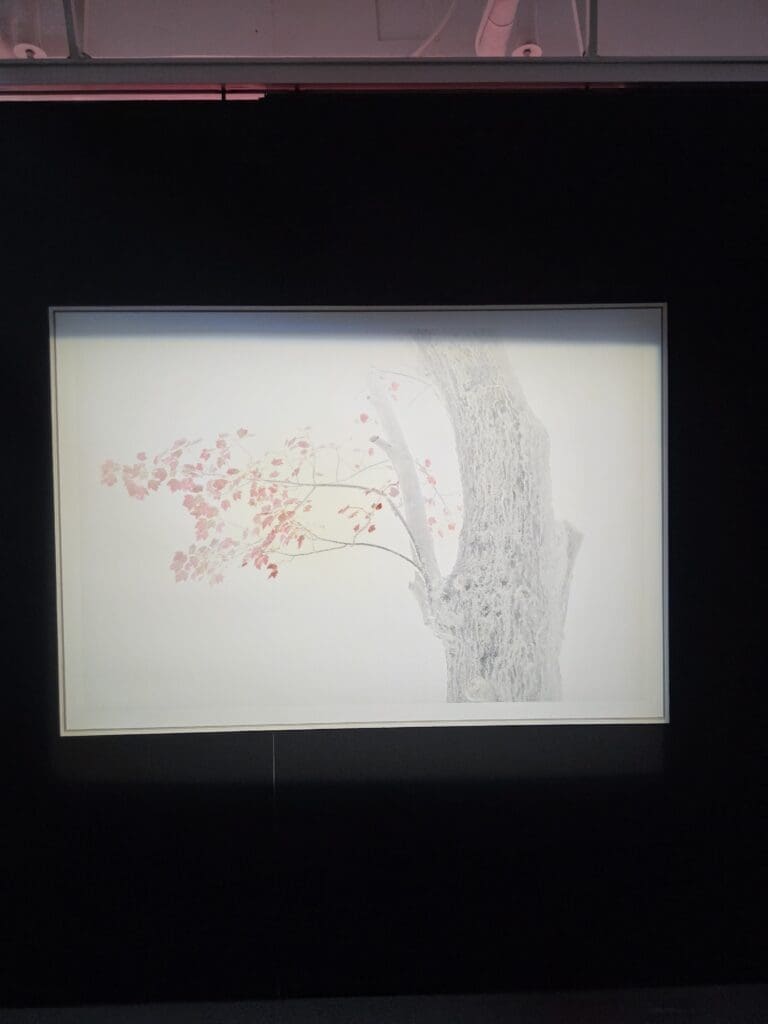
Stone Kim [Photo]
침묵의 색깔들, 나무#0500 사진, 판화지에 안료 프린트 166x116cm
침묵의 색깔들, 나무#1001 사진, 판화지에 안료 프린트 113x79cm
Colors of Silence, Wood #0500
– Photograph, pigment print on printmaking paper, 166 × 116 cm
Colors of Silence, Wood #1001
– Photograph, pigment print on printmaking paper, 113 × 79 cm
일상생활의 평범한 사물이나 소소한 생활의 조각들을 주제로 삼아 자신만의 독창적인 시각으로 감정의 경험을 표현한다. 2010년대 중후반부터 꾸준히 사진 개인전을 개최하며 활발한 활동을 이어오고 있으며, 롯데월드타워에서 진행된 ‘라이트 피커‘에 참여하였다.
The artist explores everyday objects and small fragments of daily life, expressing emotional experiences through a unique and personal perspective. Since the mid-2010s, they have actively held solo photography exhibitions and participated in projects such as “Light Picker” at Lotte World Tower.
최성임, 설치조각
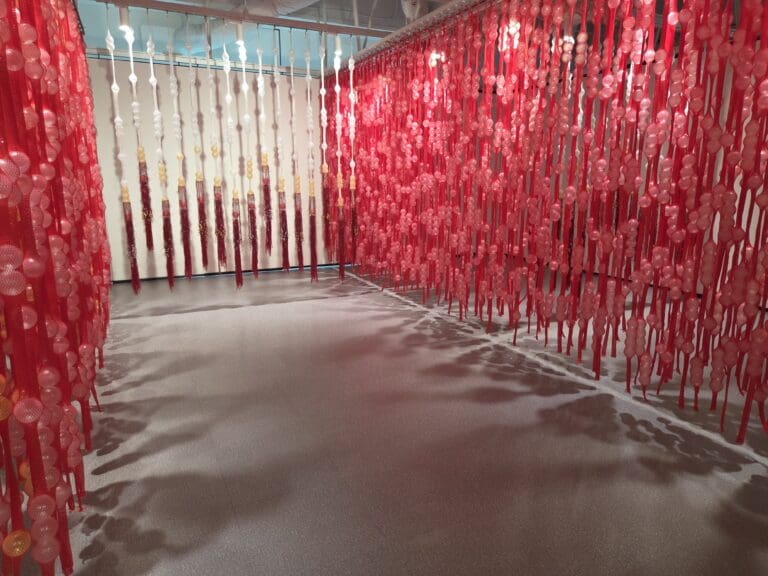
Choi Seong-im [Installation Art]
끝없는 나무 철제프레임, 폴리에틸렌망, 플라스틱공, 철제링, 실, 비즈 가변설치
Infinite Tree(Steel frame), polyethylene mesh, plastic balls, steel rings, thread, beads; variable installation
일상에서의 보이는/보이지 않는 노동(특히 여성/주부의 역할)과, 예술적/미적 노동 간의 가치를 동등하게 본다. 가사노동이 사회적으로 무시되거나 가치가 매겨지지 않는다는 점을 지적하고, 이를 예술을 통해 다시 조명하고 재구성한다. 일상용 물건, 저렴한 재료, 기능이 본래 있는 사물들을 사용하되, 그 기능을 일부러 제거하거나 흐트려서 기능적 가치만으로 존재하지 않게 만드는 전략을 쓴다. 이렇게 함으로써 일상과 예술의 경계를 흐리고, 예술행위가 단지 감정적 호소나 장식성을 넘어 일상의 노동과 직결됨을 드러낸다.
The artist equates the value of visible and invisible labor in daily life—particularly women’s and housewives’ work—with artistic and aesthetic labor. By highlighting that domestic labor is often socially ignored or undervalued, she reexamines and reconstructs it through art. She uses everyday objects, inexpensive materials, and functional items, deliberately removing or disrupting their original function so that they do not exist solely for utilitarian purposes. Through this strategy, she blurs the boundary between daily life and art, demonstrating that artistic practice is directly connected to everyday labor, beyond mere emotional appeal or decorative value.
홍성환, 유리조각
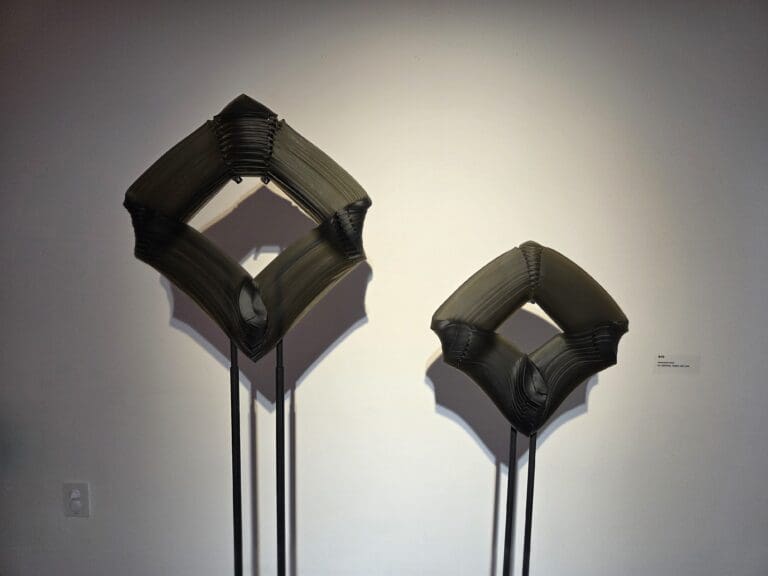
Hong Sung-hwan [Glass Art]
PANNONIA 시리즈 유리, 철제프레임 가변설치
PANNONIA Series – Glass, steel frame; variable installation
남양주에서 유리공방을 운영하며 북유럽의 라이프스타일이 담긴 유리 소품들과 인테리어 작업 중이다. 특히 그의 글래스 아트에서 보일 듯 말 듯한 투명한 유리는 아련한 과거의 기억을 연상하게 한다. 반사된 사람의 얼굴과 피부색에 전혀 물들거나 동요하지 않기 때문에 자신의 얼굴을 보다가 타인의 얼굴을 발견하기를 바라는 그의 마음이 작품에 담겨있다.
Based in Namyangju, the artist runs a glass studio, creating Nordic-inspired glass accessories and interior works. In his glass art, the subtly transparent glass evokes faint memories of the past. Because the reflective surface does not absorb or alter the color of a person’s face or skin, his intention is embedded in the work: viewers may notice their own reflection first and then discover the faces of others, creating a contemplative experience.
조복래, 소목장
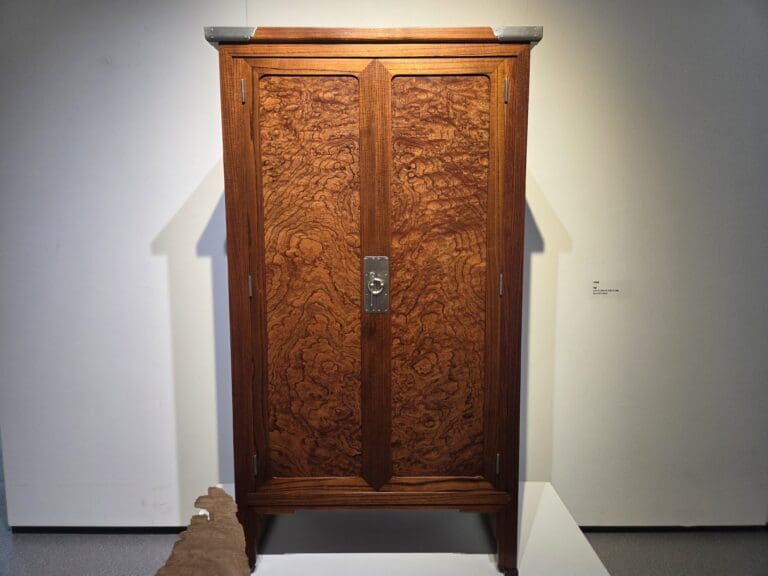
Jo Bok-rae [Traditional Woodcraft Artisan]
책장 느티나무, 참죽나무, 오동나무 옻칠 78.5×43×139cm
Bookcase – Zelkova, Chinese mahogany, paulownia; lacquer 78.5 × 43 × 139 cm
1979년 전통 목가구 제작에 입문한 이후 40여 년간 짜맞춤, 민어풀 접착 등 전통 기법을 고수하며 꾸준히 작품 활동을 이어오고 있다. 느티나무, 오동나무, 먹감나무 등 국내산 목재를 사용하고, 나무 고유의 결과 무늬를 살리는 제작 방식이 특징이다. 못을 사용하지 않는 짜맞춤 구조와 오랜 자연 건조 과정을 통해 가구 본연의 아름다움과 뛰어난 내구성을 구현하고 있다. 1999년 전승공예대전 입선을 시작으로 문화재청장상 수상, 2011년 경남 최고장인 선정, 2016년 무형문화재 지정 등 다양한 수상 및 지정 이력을 보유하고 있다. 현재는 아들과 함께 전통 목공 기술을 계승하며, 전시와 교육 활동을 통해 소목장의 가치를 널리 알리고 있다.
Since beginning his training in traditional wooden furniture in 1979, the artisan has spent over forty years adhering to classical techniques such as joinery and natural fish-glue adhesion. He works exclusively with Korean hardwoods—such as zelkova, paulownia, and persimmon wood—embracing their inherent grain and character. His furniture is defined by joinery structures made without nails and by long periods of natural wood drying, resulting in both the material’s authentic beauty and exceptional durability. Starting with an entry award at the 1999 National Intangible Heritage Craft Exhibition, he has since received numerous honors, including the Cultural Heritage Administration Award, recognition as the Master Artisan of Gyeongnam in 2011, and designation as an Intangible Cultural Property holder in 2016. Today, he works alongside his son, continuing the lineage of traditional woodworking and promoting the value of somokjang through exhibitions and educational programs.
사공숙, 조각
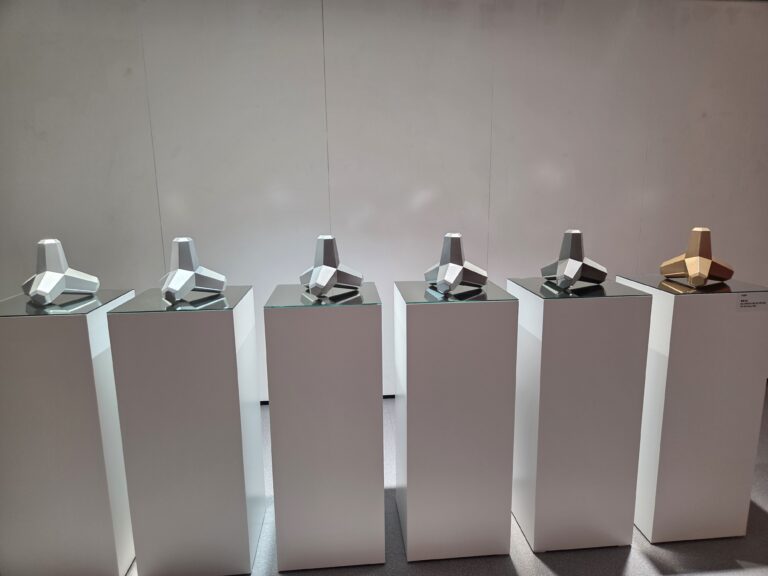
Sa Gong-suk [Sculpture]
물결 넘어 시리즈 스테인리스스틸, 미러, 캔디도장 26×26×22cm
Beyond the Waves Series, Stainless steel, mirror, candy coating 26 × 26 × 22 cm
큐브 형태의 작품을 통해 인간의 삶과 경험을 표현하며, 한지와 커피, 철 등 다양한 재료를 활용한다. 분할된 기하학적 표면으로 이루어진 큐브 형태의 조각 작품이 특징이며, 인간의 경험과 감정을 언어와 게임판처럼 표현하는 것이 특징이다. 이번 전시한 작품은 포항의 지역성과 동해안 바다의 생명력, 그리고 철강 산업도시의 강인한 힘을 함께 드러내는 조형물이며, 빛과 각도에 따라 색감과 질감이 달라지는 시각적 변주를 구현한다.
The artist expresses human life and experience through cube-shaped sculptures, working with materials such as hanji, coffee, and metal. His signature style lies in geometric, segmented surfaces that function like a visual language or game board, symbolizing human emotions and narratives. The work presented in this exhibition reflects the locality of Pohang, the vitality of the East Sea, and the enduring strength of the city’s steel industry. Through shifting light and viewing angles, the piece produces changing colors and textures, offering a dynamic visual experience.
천경희, 도예
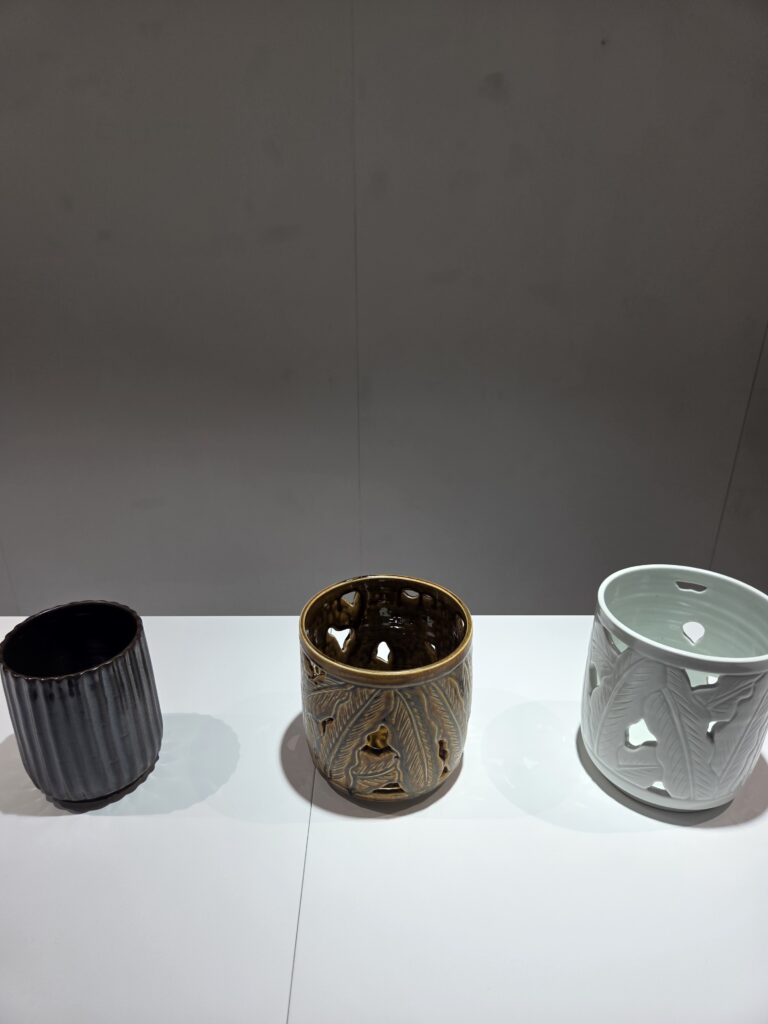
Cheon Kyung-hee [Ceramic]
흑유파초문지통 점토 –
백자파초문지통 점토 –
연적 시리즈 7ea 점토 –
Black Glaze Wave-and-Grass Pattern Brush Pot
White Porcelain Wave-and-Grass Pattern Brush Pot
Inkstone Series, 7 pieces
고려와 조선 도공의 명맥을 잇는 경상북도 무형문화재 도천(陶泉) 천한봉 명장의 전수조교인 천경희 작가는 부친인 천한봉 명장에게 전수받은 전통 기법을 기반으로 창의성과 현대적인 요소를 가미하여 찻사발 및 다양한 형태의 차도구를 만든다. 유약을 손수 만들며, 최근에는 흑유(칠기유약)를 활용해 생활도자기를 선보이고자 노력하고 있다.
As the designated transmission instructor for Master Artisan Cheon Han-bong—Gyeongsangbuk-do Intangible Cultural Heritage holder and a potter who carries the lineage of Goryeo and Joseon ceramic traditions—ceramist Cheon Kyung-hee creates tea bowls and a wide range of tea wares grounded in techniques passed down from her father. Building on these traditional methods, she incorporates creativity and contemporary sensibilities into her work. She prepares her own glazes by hand, and in recent years has been exploring the use of heukyu (black lacquer-like glaze) to develop functional ceramics suited for modern daily use.
김대철, 도예
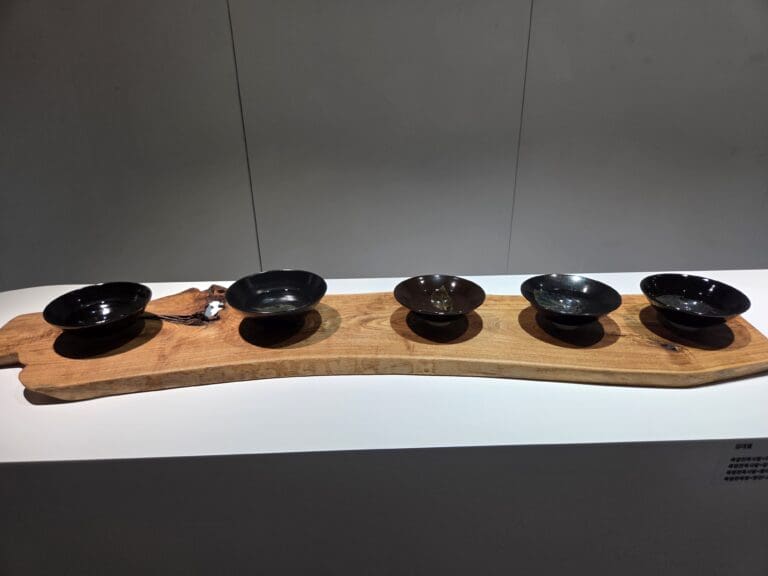
Kim Dae-cheol [Ceramic]
목엽천목사발<귀연>1ea 수비토, 유약 –
목엽천목사발<청연>2ea 수비토, 유약 –
목엽천목사발<황아>2ea 수비토, 유약 –
목엽천목병<청연>1ea 수비토, 유약 –
Mokyeop Cheonmok Tea Bowl <Guyeon> — 1 ea
Mokyeop Cheonmok Tea Bowl <Cheongyeon> — 2 ea
Mokyeop Cheonmok Tea Bowl <Hwang-a> — 2 ea
Mokyeop Cheonmok Bottle <Cheongyeon> — 1 ea
김대철 선생은 경상북도무형문화재로 백자와 목엽천목을 재현하여 활동하는 장인이다. 목엽천목은 나뭇잎을 넣어 고온에서 구운 다기를 일컫는데 그 제작방법이 전승되지않아 현재에도 만들기가 쉽지않고 여러가지 제작 방법이 논의되는 다기이다. 다만 분명한 것은 초벌이 된 그릇에 유약을 시유하고 나뭇잎을 올려 구워야하고 그 잎은 뽕나무잎이어야한다는 점이며 김대철 선생은 이부분에서 높은 점수를 받아 전승공예대전을 비롯한 다른 공모전에서 높은 평가를 받은 수상을 하고 있다.
Master Kim Dae-cheol, a Gyeongsangbuk-do Intangible Cultural Heritage holder, is a ceramic artisan known for recreating white porcelain (baekja) and mokyeop cheonmok tea ware. Mokyeop cheonmok refers to tea bowls fired at high temperatures with tree leaves placed on their surface—an extremely rare technique whose original method was not fully passed down, making it difficult to reproduce even today. Various approaches to its reconstruction continue to be discussed. What is certain, however, is that the vessel must be bisque-fired, glazed, and then fired again with a leaf placed on its surface—and that this leaf must be from the mulberry tree. Kim Dae-cheol has been highly recognized for his exceptional mastery of this technique, earning major awards at the National Intangible Heritage Craft Exhibition and other juried competitions.
박종군, 장도장
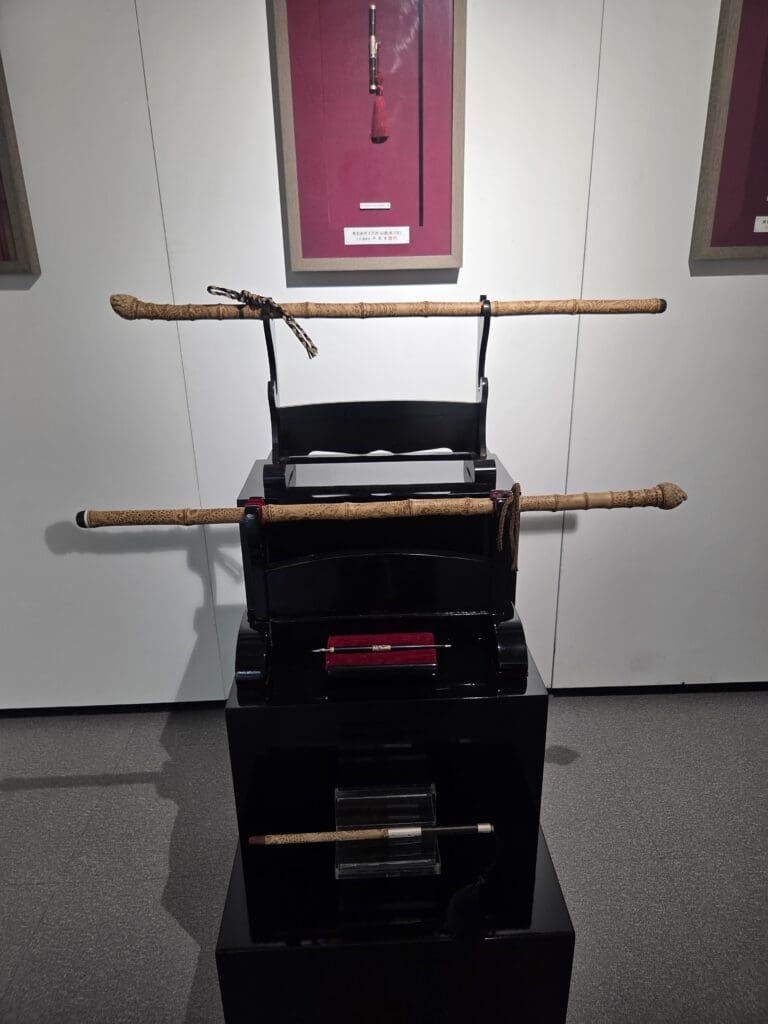
Park Jong-gun [Dagger]
용문낙죽장도 대나무, 소뼈, 흑단나무, 강철, 송진, 전장길이 97cm
까치와 호랑이문 낙죽장도 대나무, 소뼈, 흑단나무, 강철, 송진 전장길이 97cm
흑단 은장 용문낙죽장도 대나무, 소뼈, 흑단나무, 강철, 송진 전장길이 36cm
Dragon Pattern Bamboo-Falling Jangdo – Bamboo, cow bone, ebony, steel, pine resin
Total length: 97 cm
Magpie and Tiger Pattern Bamboo-Falling Jangdo – Bamboo, cow bone, ebony, steel, pine resin
Total length: 97 cm
Ebony Silver-Inlaid Dragon Pattern Bamboo-Falling Jangdo – Bamboo, cow bone, ebony, steel, pine resin
Total length: 36 cm
박종군 작가는 국가무형문화재 제60호 ‘장도장(粧刀匠)’ 보유자이며, 전통 장도 제작을 계승·발전시키고 있는 대한민국의 대표적인 장도장이다. 故 박용기 장인의 뒤를 이어 3대째 가업을 이어오고 있으며, 전통 기술과 예술적 감각을 조화롭게 융합하고 있다. 미술을 전공한 경험을 바탕으로 장도에 스토리텔링을 더하는 작업을 지속해 왔으며, 장도를 단순한 무구가 아닌 예술성과 철학이 담긴 문화유산으로 승화시키고자 노력하고 있으며, 장도 제작 과정은 약 177단계에 이르는 정교한 수작업으로 그 전통성과 가치를 실연과 교육을 통해 대중에게 알리고 있습니다.
광양장도박물관과 전수교육관을 중심으로 공개 시연과 전통문화 교육을 운영하며, 무형문화유산의 현대적 계승에 앞장서고 있습니다. 현재는 아내와 아들과 함께 3대가 협업하여 장도의 전통을 계승하고, 충절·의리·정절의 정신을 현대 사회에 전하고자 힘쓰고 있다.
Park Jong-goon is the holder of National Intangible Cultural Heritage No. 60, Jangdojang (Traditional Korean Dagger Artisan). He is the third-generation master of his family lineage, succeeding the late master Park Yong-gi. Park blends traditional craftsmanship with an artistic approach, creating daggers that embody both cultural heritage and contemporary sensibility. The making of a jangdo involves about 177 precise hand-crafted steps, a process he actively demonstrates at the Gwangyang Jangdo Museum and its training center. Working together with his wife and son, he continues to preserve the tradition of jangdo while sharing its values of loyalty, integrity, and devotion with modern audiences.
박남중, 장도장
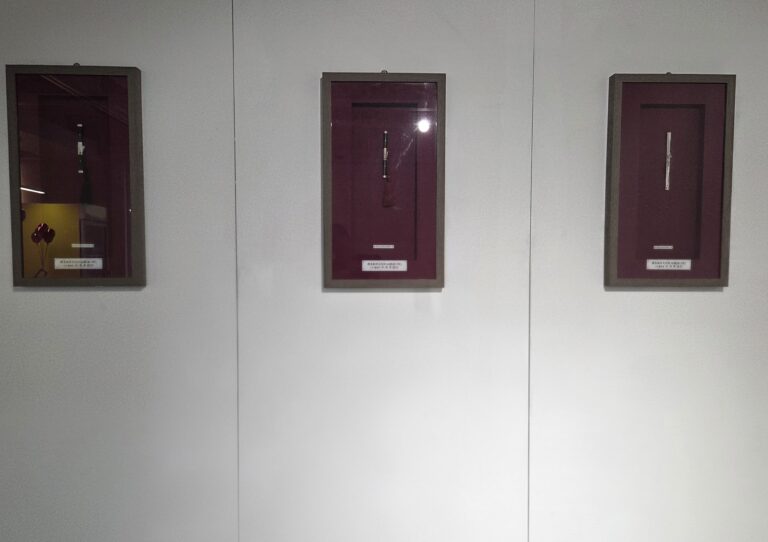
Park Nam-jung [Dagger]
흑단은장갖은사각도 순은, 강철, 송진 전장길이 15cm
흑단은장갖은원형도 순은, 강철, 송진 전장길이 15cm
은장사각첨자도 순은, 강철, 송진 전장길이 18.5cm
Ebony Silver-Inlaid Rectangular Dagger – Pure silver, steel, pine resin, Total length 15 cm
Ebony Silver-Inlaid Circular Dagger – Pure silver, steel, pine resin, Total length 15 cm
Silver-Inlaid Rectangular Pointed Dagger – Pure silver, steel, pine resin, Total length 18.5 cm
박종군 장도장의 아들. 2005년부터 2009년까지 장도장에 입문 및 전수 장학생으로 활동하였다. 국가무형문화재 제60호 장도장 3대 이수자.
The artist is the son of Master Park Jong-goon. From 2005 to 2009, he trained as an apprentice and scholarship student in the art of jangdo. He is the third-generation trainee (isu-ja) of National Intangible Cultural Heritage No. 60, Jangdojang.
박건영, 장도장
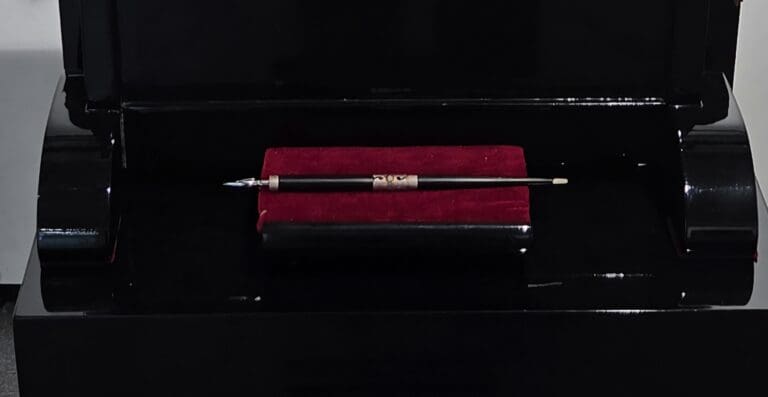
Park Geon-young [Dagger]
흑단은장펜장도 순은, 강철, 송진 전장길이 23cm
Ebony Silver-Mounted Pen Jangdo
– Pure silver, steel, pine resin, Total length 23 cm
박종군 장도장의 아들. 2013년 장도장 전수 장학생으로 입문하였다. 국가무형문화재 제60호 장도장 3대 이수자로 2020년 국가무형문화재 이수심사를 통과하였다.
The artist is the son of Master Park Jong-goon. He began his training in 2013 as a scholarship apprentice in jangdo craftsmanship. As the third-generation trainee (isu-ja) of National Intangible Cultural Heritage No. 60, Jangdojang, he passed the official proficiency review in 2020.
전강옥, 설치조각
Jeon Gang-ok [Installation Art]
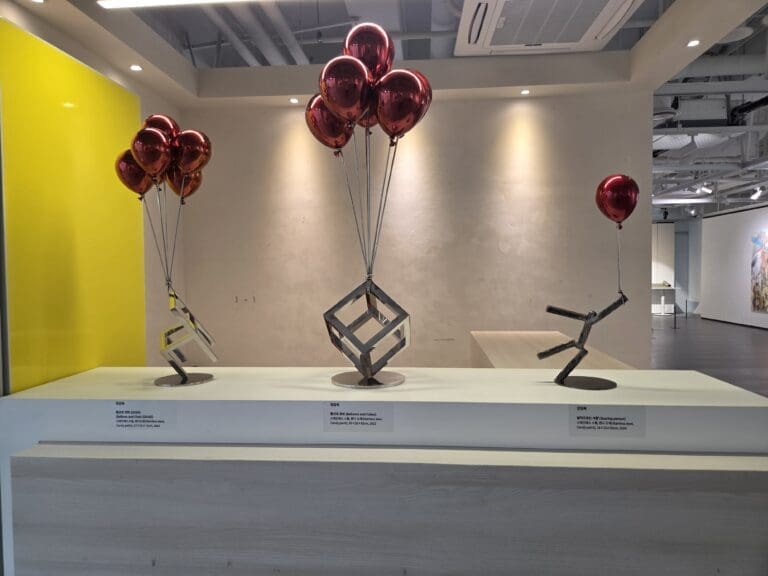
풍선과 의자 스테인레스스틸, 캔디도색 27x25x71cm
풍선과 큐브 스테인레스 스틸, 캔디 도색 30x28x83cm
날아오르는 사람 스테인레스 스틸, 캔디 도색 18x15x50cm
Balloon and Chair – Stainless steel, candy coating, 27 × 25 × 71 cm
Balloon and Cube – Stainless steel, candy coating, 30 × 28 × 83 cm
Flying Human – Stainless steel, candy coating, 18 × 15 × 50 cm
전강옥 작가는 스테인리스 스틸을 활용해 중력과 균형, 상실, 자유의지 같은 개념을 시각적으로 탐구하는 조각가입니다. 그의 작품은 금속이라는 무거운 재료를 사용하면서도 마치 공중에 떠 있는 듯한 가벼움과 초현실적인 분위기를 자아냅니다. 풍선에 매달린 동물이나 사물 등, 중력을 거스르는 형상을 통해 인간의 자유의지와 상실감을 표현합니다.
Jeon Kang-ok is a sculptor who visually explores concepts such as gravity, balance, loss, and free will using stainless steel. Although his works are made from heavy metal, they convey a sense of lightness and a surreal atmosphere, as if floating in midair. Through forms that defy gravity—such as animals or objects suspended from balloons—he expresses human free will and the experience of loss.
유세현, 궁시장
Yoo Se-hyun [Master Bowyer]
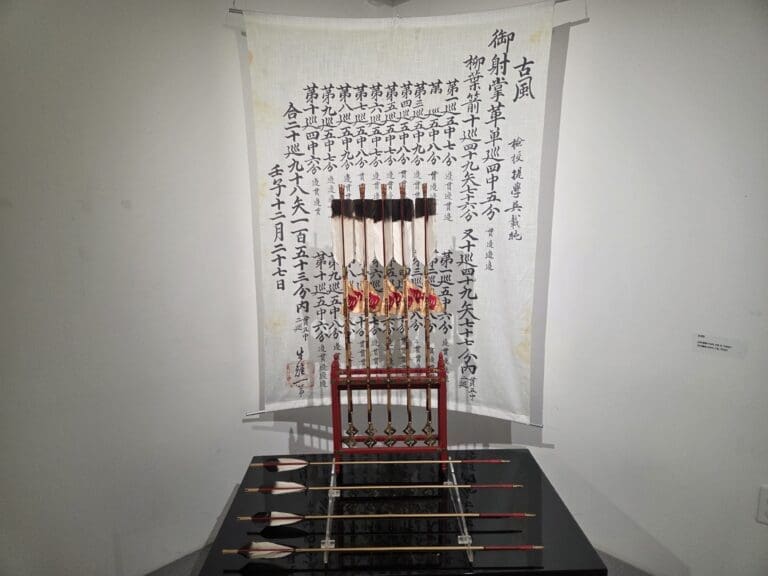
신전(信箭) 화살촉, 깃털, 천 가변설치
Sinjeon, Arrowhead, feathers, cloth – Variable installation
故 유영기 보유자의 아들로, 가업을 이어받아 4대째 장단 화살의 전통을 이어가고 있다. 파주출생으로 1986년에 본격적으로 시작하여, 2004년 전수교육조교(現 전승 교육사)를 거쳐 2022년 궁시장 보유자로 지정되었다. 궁시장의 지식과 제작 기술을 체계화하고, ‘효시’를 비롯한 다수의 화살을 재현하는데 몰두했다. 2001년 부자가 함께 우리나라 최초의 활, 화살 전문 박물관인 영집궁시박물관을 정식 개관하여 매해 다양한 관점에서 우리 활과 화살의 역사와 문화를 두루 살핀 특별전과 기획전을 개최하며 활과 화살을 알리고 있다. 궁시장은 활과 화살을 만드는 기능과 기능을 가진 사람으로 활 만드는 사람을 궁장(弓匠), 화살 만드는 사람을 시장(矢匠)이라 부르는데 조선의 비밀병기 ‘편전’을 복원한 이들 부자는 화살을 만드는 시장(矢匠)에 해당한다.
The artist is the son of the late Master Yu Young-gi, continuing the fourth-generation tradition of Jangdan arrows. Born in Paju, he began training in 1986 and became a National Intangible Cultural Heritage holder (Gungsi, traditional Korean bow and arrow craftsman) in 2022.
Together with his father, he co-founded the Yeongjip Gungsi Museum, Korea’s first bow and arrow museum, and has dedicated himself to preserving and demonstrating traditional arrow-making techniques, including reproductions of historical arrows such as the Joseon-era Pyeonjeon.
김선익, 유기장
Kim Sun-ik [Brassware]
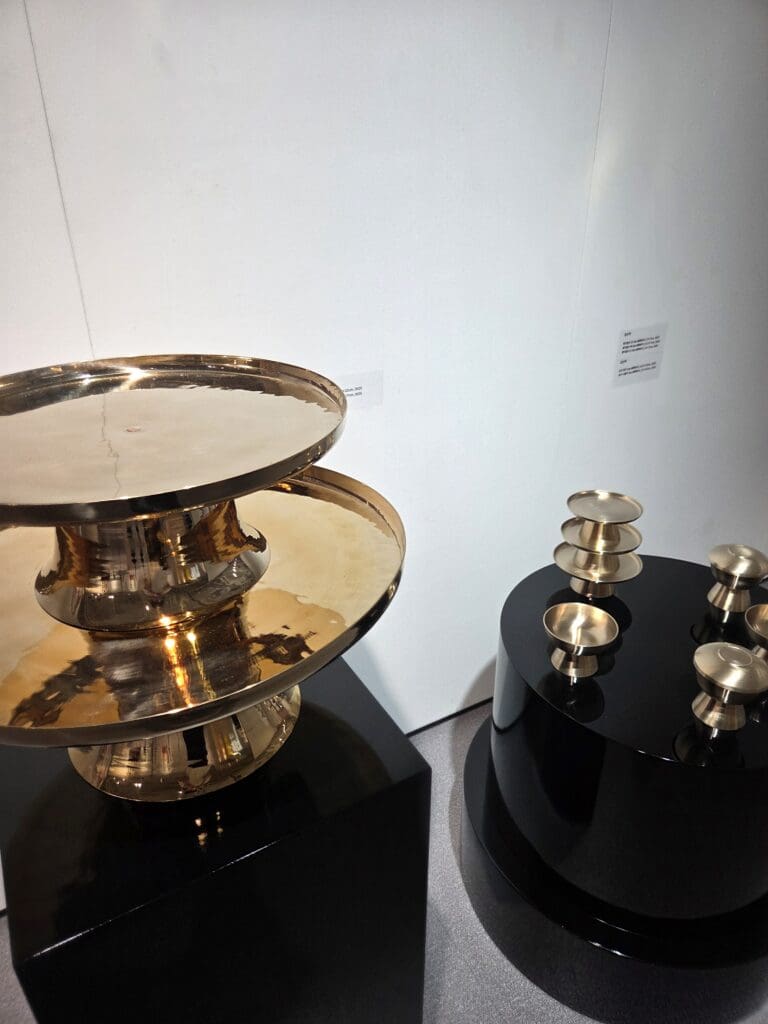
놋반상 50×22cm
놋반상 40×17cm
제기접시 大 봉화 유기 17x7cm
제기접시 中 봉화 유기 15.3x7cm
제기접시 小 봉화 유기 14x7cm
유기 탕기 봉화 유기 10.5x10cm
유기 나물기 봉화 유기 12×8.5cm
Brass trays : 50 × 22 cm, 40 × 17 cm
Jeongi Dishes – Bonghwa Brassware
Large 17 × 7 cm
Medium 15.3 × 7 cm
Small 14 × 7 cm
Bonghwa Brass Soup Bowl, 10.5 × 10 cm
Bonghwa Brass Vegetable Bowl, 12 × 8.5 cm
500여년의 장구한 역사를 가진 봉화유기는 전국의 많은 장인들에게 유기제조 기술을 전파한 우리나라 유기제조의 발상지로, 1994년부터는 경상북도 무형문화재 제22호로 지정 관리하게 되었다. 4대째 이어온 ‘내성유기‘는 주물유기로 뜨거운 불길 속에서 숱한 매질과 불질을 반복해야만 비로소 그 모습을 드러내는 하나의 예술품이다.
Kim Sun-ik is a traditional brassware craftsman from Bonghwa, preserving the legacy of Bonghwa Brassware. This tradition, which began in the 1840s, became one of Korea’s major brassware production centers and was designated Gyeongsangbuk-do Intangible Cultural Heritage No. 22 in 1994. Kim Sun-ik combines traditional techniques with modern aesthetics, creating brassware that balances functional utility and artistic value.
오유경, 공예
Oh Yu-kyung [Craft]
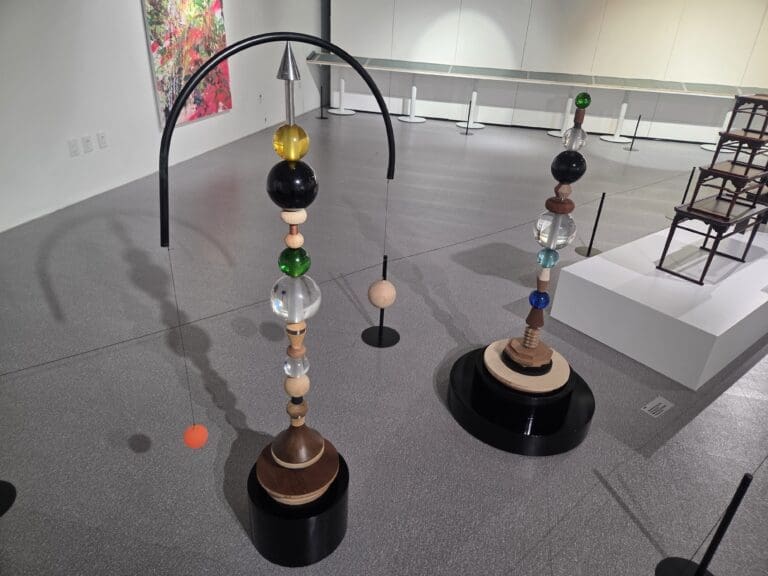
바람의 탑 크리스탈, 나무, 메탈, 고무등 34×34×108cm
바람의 탑 크리스탈, 금속, 목재, 혼합재료 25×60×130cm
Crystal, wood, metal, rubber – 34 × 34 × 108 cm
Crystal, metal, wood, mixed media – 25 × 60 × 130 cm
현대 미술의 거장 주세페 페노네로부터 사사받은 오유경 작가는 일상적 재료를 가지고 작업을 해오고 있다. 2012년 에르메스에서 주관하는 아티스트 레지던시 프로그램에 주세페 페노네의 추천으로 참가하게 되면서 은 기구 제작으로 유명한 ‘퓌포카 공방‘에서 장인들과 함께 은과 같은 메탈에 대한 탐구를 하게 된다. 현재는 물질과 비물질 사이를 오가며 작업하고 있으나, 작업의 초기부터 삶의 순환이나 자연의 섭리를 바람이나 빛, 중력과 같은 비물질적인 것으로 작업하는 데 몰두해왔다.
Oh Yu-kyung, a contemporary artist trained under the master Giuseppe Penone, works with everyday materials to explore the relationship between material and immaterial phenomena. In 2012, recommended by Penone, she participated in the Hermès Artist Residency, studying metalwork, including silver, alongside artisans at the Fupoca Atelier. Her work has consistently focused on imperceptible forces—such as wind, light, and gravity—to explore the cycles of life and the laws of nature, bridging the tangible and intangible in her artistic practice.
김영민, 소반장
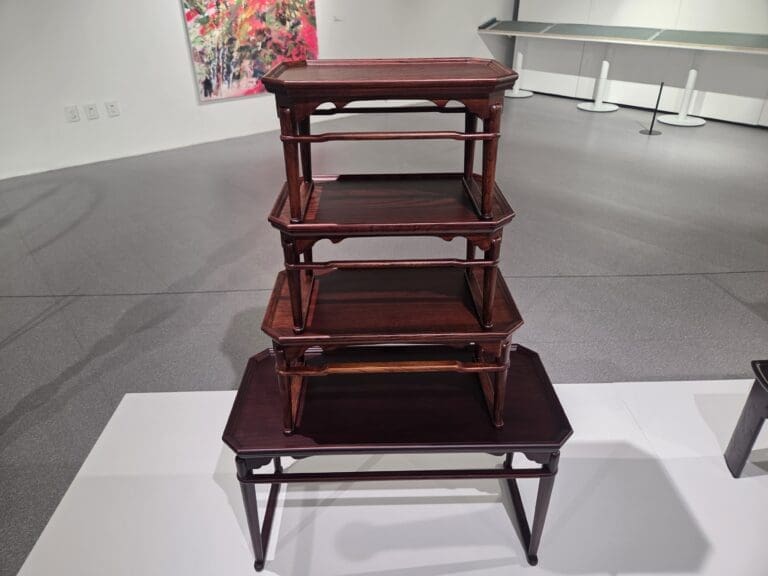
Kim Young-min [Small Traditional Korean Table]
나주반 느티나무 59x28x35cm
나주반 느티나무 40x24x18cm
나주반 느티나무 34x21x18cm
나주반 느티나무 31x20x18cm
반월반 느티나무, 참죽나무 30x21x18cm
Naju Trays
Zelkova wood 59 × 28 × 35 cm
Zelkova wood 40 × 24 × 18 cm
Zelkova wood 34 × 21 × 18 cm
Zelkova wood 31 × 20 × 18 cm
Banwol tray – Zelkova & Jujube wood 30 × 21 × 18 cm
일본의 민예 연구가 야나기 무네요시는 1922년 펴낸 ‘조선과 그 예술’을 통해 나주반 업자의 명맥이 거의 끊어졌다고 언급했다. 1955년부터 삼종형인 김락연의 밑에서 목수 일을 배운 국가무형유산 김춘식 선생의 막내아들인 김영민 이수자는 아버지와 함께 나주반의 맥을 이어가고 있다. 나주반은 간결하면서 견고한 것이 특징이다. 천판의 네 귀를 귀접이하여 모를 잘라낸 형태로서, 가락지(다리를 연결하는 가로 부재)등의 간결미가 우선한다. 상판 가장자리인 변죽이 특징인데 아교를 칠하고 홈을 판 변죽을 둘러 끼우는 방식으로 이곳에는 대못을 쳐서 견고함을 더한다.
Renowned for their simplicity and sturdiness, Naju trays have a long tradition in Korean craft. In 1922, Japanese ethnologist Yanagi Muneyoshi noted that this craft was nearly lost. Kim Young-min, youngest son of National Intangible Cultural Heritage holder Kim Chun-sik, learned woodworking from his father and uncle, Kim Rak-yeon, in 1955. Together, they continue the legacy of Naju trays. These trays are recognized for their precise, durable construction: the top corners are joined with gwi-jeop cuts, horizontal braces (garakji) connect the legs, and the rim (byeonjuk) is glued, notched, and reinforced with wooden pegs, combining strength with elegant simplicity.
조현영, 소목장
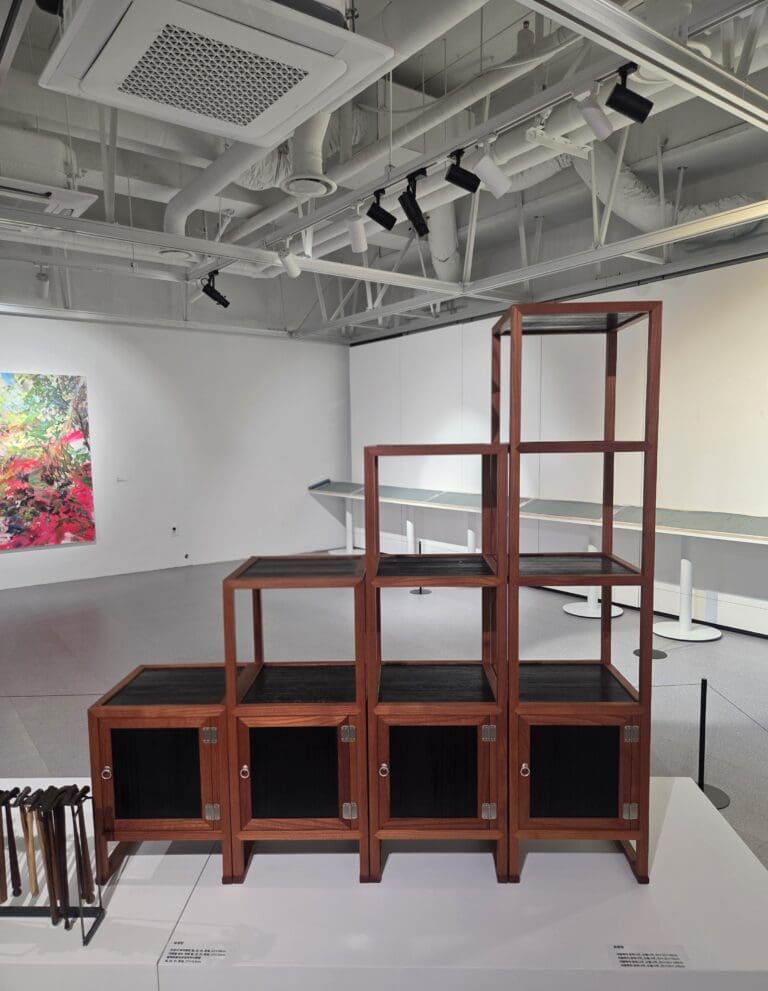
Cho Hyun-young [Small Traditional Table]
사방탁자 참죽나무, 오동나무 33×33×44cm
사방탁자 참죽나무, 오동나무 33×33×75cm
사방탁자 참죽나무, 오동나무 33×33×106cm
사방탁자 참죽나무, 오동나무 33×33×136cm
Square Tables
Jujube & Paulownia wood 33 × 33 × 44 cm
Jujube & Paulownia wood 33 × 33 × 75 cm
Jujube & Paulownia wood 33 × 33 × 106 cm
Jujube & Paulownia wood 33 × 33 × 136 cm
경남 진주에서 무형문화재 소목장 아버지로부터 전통가구를 배운 이수자, 조현영 작가는 다양한 목재를 활용하여 소반, 서안, 식탁, 나비장 등 전통가구를 현대적인 재해석을 하는 작가입니다. 작가의 손길에서 탄생하는 작품은 전통의 정수를 현대적 감각을 가미한, 과거와 현재가 조화를 이루는 헤리티지의 경험을 선사합니다.
Trained in traditional furniture by her father, a Gyeongnam Jinju Intangible Cultural Heritage Sobanjang, Cho Hyun-young creates small tables (soban), desks, dining tables, and butterfly chests. Using various woods, she reinterprets traditional Korean furniture with a contemporary sensibility, blending past and present to offer a heritage experience that reflects both tradition and modern aesthetics.
승경란, 입사장
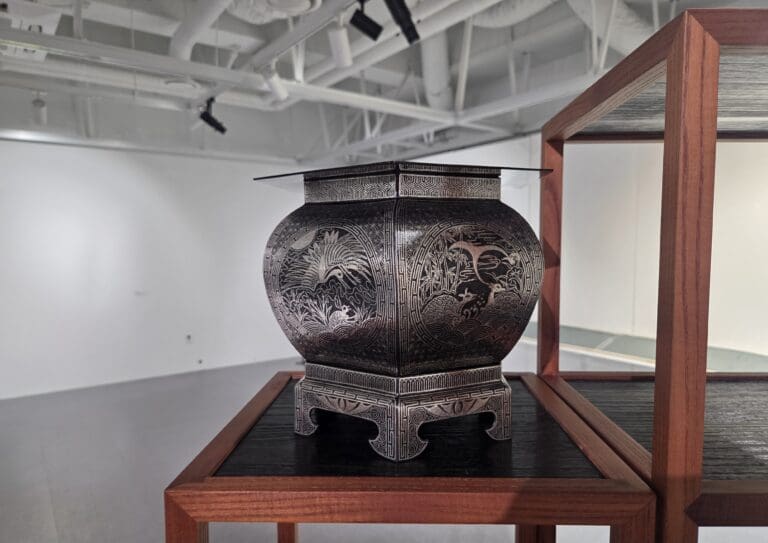
Seung Kyung-ran [Master of Metal Inlay]
은입사 육각향로 철, 금, 은, 옻칠 25×28cm
마음을 담는 차합 철, 금, 은, 옻칠 13×10cm
철제운봉보상당초무늬향합 철, 금, 은, 옻칠 17×9.5cm
Hexagonal Incense Burner with Silver Inlay, iron, gold, silver, lacquer, 25 × 28 cm
Tea Caddy “Filled with Heart,” iron, gold, silver, lacquer, 13 × 10 cm
Iron Incense Container with Cloud and Grass Pattern, iron, gold, silver, lacquer, 17 × 9.5 cm
입사는 금속 표면에 홈을 파고 금·은선을 박아 장식하는 전통 기법이다. 선생님은 전통 입사 기법을 현대적으로 재해석하여 다양한 작품을 제작하고 있다. 대표 작품으로 ‘산수(함)’과 ‘입사 BROOCH’가 있다. 서울대학교 금속공예과 강사로 후학 양성에 힘쓰고 있다.
Seung Kyung-ran is a master of Korean metal inlay (eunsa), a traditional technique where grooves are carved into metal surfaces and filled with gold or silver wire for decoration. She reinterprets this method in a contemporary context, creating a variety of works including Sansu (Box) and Inlay Brooch. She also teaches at Seoul National University’s Metal Craft Department, nurturing the next generation of artists.
진형주, 회화
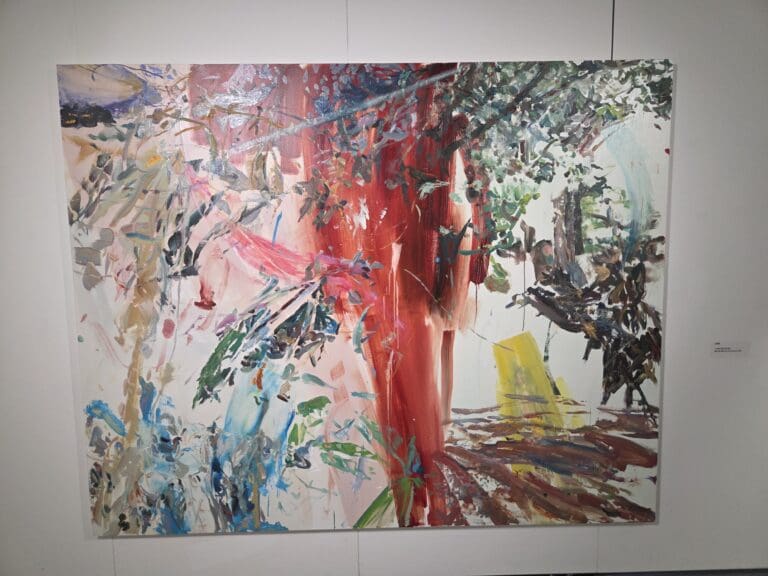
Jin Hyeong-ju [Painting]
그 모든 곳에 너는 있다 캔버스에 유채 181.8×227.3cm
그 모든 곳에 너는 있다 캔버스에 유채 162×112cm
고장난 분수와 햇살 캔버스에 유채 162×130cm
You Are Everywhere oil on canvas 181.8×227.3 cm
You Are Everywhere oil on canvas 162×112 cm
Broken Fountain and Sunlight oil on canvas 162×130 cm
2009 국민대 일반대학원 회화전공 졸업 후 현재 강상예술촌에서 활발한 활동을 이어오고 있는 진형주 작가는 완전한 구상도 추상도 추구하지 않는다. 작가는 아무 의도가 없는 그림은 어떤 것보다 선명한 그림이 된다고 한다. 사실적 재현 보다는 작가 본인이 형태를 주도할 수 있을 정도만 그림에 개입한 뒤 나머지는 관람객이 작가의 새로운 공간에 자유롭게 들어갈 수 있도록 해준다. 보는 이가 누구든 마음껏 상상할 수 있는 그림을 그린다. 그에게 그림은 언제나 극한 마음의 문제로 귀결된다. 그것은 즐거움인 동시에 두려움이다. 작가에게 그림은 결정되고 완성된 마음을 그리는 것이 아니라 움직이며 변화하는 온전한 흐름에 있다.
Jin Hyeong-ju, who graduated from the Graduate School of Fine Arts at Kookmin University in 2009, is currently active at Gangsang Art Village. He does not pursue purely figurative or abstract painting. He believes that a painting without deliberate intention can be clearer than any other. Rather than aiming for realistic representation, he intervenes just enough to guide the form, leaving the rest for viewers to freely enter the artist’s new space. His works invite open imagination, allowing anyone to engage freely. For him, painting always reflects the depths of the mind, embodying both joy and fear. His work captures not a fixed or completed state of mind but a dynamic, flowing process.
김경미, 사경장
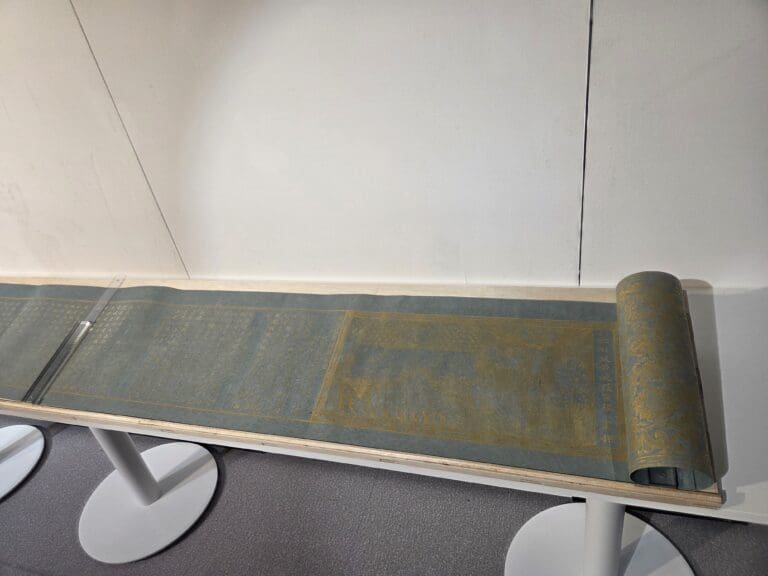
Kim Kyung-mi [Sutra Copying Artist]
취지 순금니 금강반야바라밀경 翠紙 純金泥 金剛般若波羅蜜經
순금가루[純金泥] 취지[쪽 염색종이] 옻 포수 30×1,043cm
Chitji, Sunggeumni, Geumgangbanya Baramilgyeong
Indigo-dyed paper (Chitji), pure gold powder, lacquered mounting, 30×1,043cm
사경(寫經)은 마음을 모아 종교 경전을 한자 한자 옮겨 쓰는 것으로, 고구려에 불교가 전래된 이래 1700여년의 역사를 가지고 있다. 작가는 2020년 “사경 분야” 전공 증서를 국가무형문화재 기능협회에서 받았고, 2019년 서울시 전통문화 발굴∙계승 지원사업에 선정되는 등 우수한 실력을 인정받았다. 제28회 대한민국불교미술대전 대상, 2024년 제49회 대한민국전승공예대전 대통령상 수상작으로 ‘법화경 변상도’ 선정되기도 했다. 지난 2010년 서울특별시 지정 ‘사라져가는 전통문화 사경자’로 선정되기도 했다. 사경은 닥나무원료를 쪽 염료로 선염(先染)해 제작한 전통감지(紺紙)에 금니(金泥)로 쓴 작품으로 ‘금운’ 김경미 작가는 대표적인 전통 사경 작가로 활동하고 있다.
Sutra copying (사경, Sakyang) is the careful hand-transcription of Buddhist scriptures, a practice in Korea for over 1,700 years since Buddhism’s introduction in Goguryeo. Kim Kyung-mi, certified in 2020 by the National Intangible Cultural Heritage Skills Association, was selected for the 2019 Seoul Traditional Culture Excavation and Inheritance Support Project. Her awards include the Grand Prize at the 28th Korean Buddhist Art Exhibition and the Presidential Award at the 49th Korea Traditional Crafts Competition (2024) for her Lotus Sutra Transformation Painting. In 2010, she was named a “Disappearing Traditional Culture Sutra Copyist” by Seoul. Working under the name “Geumun,” Kim creates works on indigo-dyed mulberry paper using gold ink, exemplifying her mastery and dedication to preserving traditional Korean sutra copying.